How to start a permanent jewelry business: buy a reliable welder, durable chain and safety gear, insure against liability, and check local registration rules. The welder is the biggest cost, and a welder-free kit is a cheaper but different route.
This guide sits alongside our wider advice on how to start a creative business. It focuses on the equipment, insurance and pop-up decisions specific to permanent jewelry.
Why the welder shapes every other decision
Permanent jewelry is welded closed on the client, so the welder drives your costs, your safety routine and your insurance needs. One supplier guide calls a reliable, precision welding machine the cornerstone of any permanent jewelry business. Another educational page points out that welding happens directly on a person, which raises the standard significantly.
Three things follow from that. The machine is the purchase to research most carefully. Training matters before your first paying client. Cover for harm to a client is a day-one requirement, not an add-on. The sections below follow that order, from equipment to chain, training, insurance and the launch itself.
Equipment and what it costs
Start with the welder and the hand tools that make a clean weld possible. Listed welder prices vary widely, and the table sets them beside a welder-free starter kit so you can see the range of entry costs.
| Item | Listed price and contents | Planning use |
|---|---|---|
| ZAPP welder | $2,950 | Lowest-priced welder in this comparison; suits a first purchase or a back-up unit. |
| Orion mpulse | $4,350 | Mid-range option; compare warranty and repair terms against the ZAPP before paying the difference. |
| Orion PJ welder | $4,800 | Highest-priced welder in this comparison; worth it only if its reliability and support justify the gap. |
| PermaLinx Starter Collection (non-welded system) | $175 for a three-piece tool set | Low-cost way to test demand without a welder, but it is a different product and process. |
Welder prices are the figures displayed (currency as shown) on a permanent jewelry training provider’s site, and the starter collection price and contents come from a jewelry supplier’s start-up cost page.
The ZAPP is described by a findings supplier’s business checklist as an entry-level welder that is great as a back-up. That makes it a sensible first machine if budget is tight, and a useful second unit once you are booking busy events. Before buying any machine, follow the supplier guidance to research its reliability, warranty and repair options, because downtime at a booked event costs more than a few weeks of savings.
The same checklist names the supporting kit:
- Grounded pliers: listed as necessary for welding, so they are not an optional extra.
- Argon tank and regulator: listed as great for cleaner welds. Budget for them alongside the machine.
- Safety goggles: for you and your client, so buy a pair for each person in the chair.
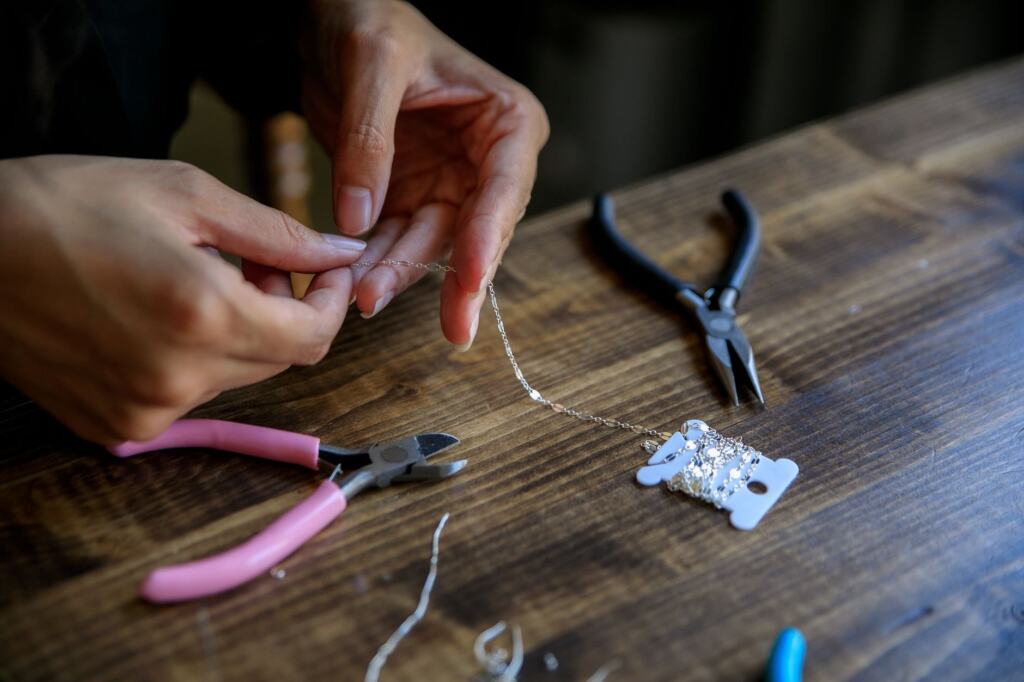
- Flush cutters: the checklist stresses flush cutters, not just wire cutters, for clean chain ends.
A welder-free system changes the equation. The supplier behind the starter collection says its system requires no welding equipment and that traditional welding equipment can cost multiple thousands of dollars on its own. That is a vendor claim, and its pieces are made of stainless steel, so it suits a low-risk trial but not a service built around welded gold-filled or solid gold chain.
Chain, jump rings and metals
Buy durable, high-quality chain and avoid plated chain. The findings supplier’s checklist says permanent jewelry requires quality that lasts and tells buyers not to get any plated chains. Plated chain is the clearest purchase to avoid, because the finish has to survive being worn continuously.
Jump rings matter as much as chain. The same checklist says they must be machine cut with flush ends to weld properly, so cheap hand-cut rings can cost you failed welds and wasted time with a client waiting.
On metals, kit suppliers offer gold-filled, solid gold and sterling silver options, and they describe their materials as hypoallergenic and durable. Treat that as a supplier claim and check allergy questions with clients at booking. If you do not want to source every style yourself, most suppliers sell starter kits of the most popular styles, which lets you build a first display without guessing at demand.
Pricing and your service menu
Price each metal separately, because your chain cost and your risk differ between gold-filled, solid gold and sterling silver. Build the menu from your actual supplier costs for chain and jump rings, then add what you need to cover machine cost, argon, insurance and your time. A single flat price for every bracelet will underprice your most expensive metal.
Training providers treat pricing as its own topic. The training provider’s course includes a module titled Pop-Ups & Pricing, which shows how established sellers think about event pricing as part of the launch rather than an afterthought. Decide your price sheet before your first event so you are not negotiating at the booth.
Training before your first client
Train on the machine before you charge anyone. Welding on skin leaves no room for learning by trial, and the course outline shows what a safe routine involves. The training provider’s course is made up of 7 modules and 36 lessons, including Safety First, Machine Set Up, Gas Tank & Regulator and Sharpening Electrodes.
Training costs vary. The findings supplier notes that some outfits charge $400-$2000 for access to video training. Some suppliers bundle it instead: one kit supplier includes training valued at $499 free with the purchase of a kit or machine. Check whether training is bundled before paying for it separately.
Insurance and registration
Liability insurance is the cover to arrange first. The findings supplier’s checklist lists liability insurance and says to ask your broker. Because you work directly on clients and often away from a fixed studio, ask the broker to confirm in writing that the policy covers welding on a client and trading at pop-ups before you accept bookings.
Registration depends on where you trade. The same checklist says a resale license or business registration depends on your local government, so check with your local authority rather than copying another seller’s setup from a different region. Sort registration and insurance together, since a venue or market organiser may ask for both.
Launching with pop-ups
Pop-ups are the usual first sales channel because they put a welder, a chain display and a queue in one place. They also test your price sheet against real customers. The checklist recommends bringing someone to help: it gets busy, and having a helper to cash out and work the lineup keeps you at the welder.
- Choose your route. Decide between a welder and a welder-free starter kit based on budget and the metals you want to offer.
- Train and practise. Complete training and rehearse machine set-up, regulator use and weld cleanup before an audience.
- Source chain and jump rings. Order durable chain and machine-cut rings, ideally from a supplier starter kit of popular styles.
- Insure and register. Confirm liability cover and your local registration requirements.
- Set prices. Fix a per-metal price sheet and a payment method.
- Book a pop-up with help. Bring a helper to handle payments and the queue, and treat the first event as a trial of your process.
Other business set-ups to compare
If you are still deciding between service ideas, compare this launch with How To Start An Interior Design Business: A Practical Step-By-Step Plan For 2026. If you would rather test demand with a lighter, solo set-up first, How To Start A Freelance Business In 2026: A Practical Step-By-Step Blueprint covers that path.
Frequently asked questions
Can I start without buying a welder?
Yes, with a different product. A non-welded starter collection costs $175 and its supplier says it requires no welding equipment. It comes with a three-piece tool set, and its pieces are stainless steel.
Which chain metals do beginners usually choose?
An educational page on beginner welders says sterling silver and gold-filled chain are common starting points because they are forgiving.
How much should I budget for training?
It ranges from nothing extra to a four-figure sum. Some video courses charge $400-$2000, while one kit supplier includes $499 worth of training free with a kit or machine.
Do I need a business licence?
It depends on your location. A resale license or business registration varies by local government, so check with yours before your first booking.