| Sales route | Verified figure | Planning use |
|---|---|---|
| Original artwork on Fine Art America | 0% commission on originals | Suits one-off pieces when you want to set the price yourself and keep the sale amount. |
| Digital downloads | Artist keeps 100% of the asking price; a 30% markup is added | Set your asking price as the income you want per file, then check that the price with the markup still looks sensible to a buyer. |
| Print on demand (canvas example) | $50 base + $25 markup = $75 buyer price; artist earns $25 | Your earnings equal your markup, so decide the markup first and test whether the resulting buyer price is realistic. |
| Galleries | About 30% commission at the least expensive galleries; up to 50% of the sale | Price work so it still pays you after the gallery’s share, and treat 50% as a ceiling rather than a typical rate. |
These figures come from Fine Art America’s guide to selling art online for the platform rows and from Louise Fletcher’s guide to selling your art for gallery commission.
How to sell your art online starts with choosing where buyers can purchase and who sets the price. Build a site you control, then add marketplaces or print on demand only where the fees leave you a margin.
Selling art is a small business with costs, pricing decisions and repeat customers, so it helps to read this alongside our guide on how to start a creative business.
Where to sell art online
Artists can sell online through their own shop, through a marketplace or print-on-demand platform, or through galleries. The right mix depends on how much control you want over price and customer contact, and how much of each sale you can afford to share.
- Your own shop. Artist Josie Lewis says that if she had to start from zero she would get a commerce website like Squarespace or Shopify, beginning with one page. Shopify suits an artist who wants to own the buying experience and the customer relationship from day one, and a single page keeps the setup small enough to finish.
- A marketplace for originals. Fine Art America offers to sell original artwork commission free. That makes it a reasonable extra shelf for originals, though a marketplace listing does not replace a site where you hold the buyer’s attention.
- Print on demand. The same platform describes a fulfilment network of 16 fulfillment centers in 5 countries behind its print products. Print on demand suits artists who want to offer reproductions without producing each one themselves, with the trade-off that income is limited to the markup.
- Galleries. Gallery commission is the highest cost in the table above. A gallery earns its share only if it brings buyers you could not reach yourself, so compare its commission with what your own site and marketplaces already deliver.
A practical order for most artists is own site first, then one marketplace or print-on-demand channel, then galleries once sales justify the commission. The fee structures behind that order shape how you set prices.
What fees mean for your pricing
Art pricing online depends on how each channel pays you, because the same piece can leave you with very different income depending on where it sells. Three pricing methods appear across the routes above, and each needs its own starting point.
- Fixed asking price. On originals and digital downloads you set the number. On downloads, Fine Art America states that the artist can keep 100% of the asking price, with a markup added on top. Start from the income you need per sale, not from what you guess buyers will tolerate.
- Base cost plus markup. In print on demand, the platform sets a base price and you add your markup. In the platform’s canvas example the artist’s earnings are the markup, so a low markup earns little however many prints sell. Raise it gradually and watch whether the buyer price still converts.
- Price after commission. With galleries, the commission comes out of the sale. Louise Fletcher notes that even the least expensive galleries charge about 30%, and that some take up to 50% of the sale. If you sell the same piece online and through a gallery, keep prices consistent and work out whether the gallery price still pays you.
Treating each channel as a separate line in a small business budget stops a high-reach platform from quietly costing more than it earns. Once the price logic is clear, the listing itself has to carry it.
Listing photos and the way to buy
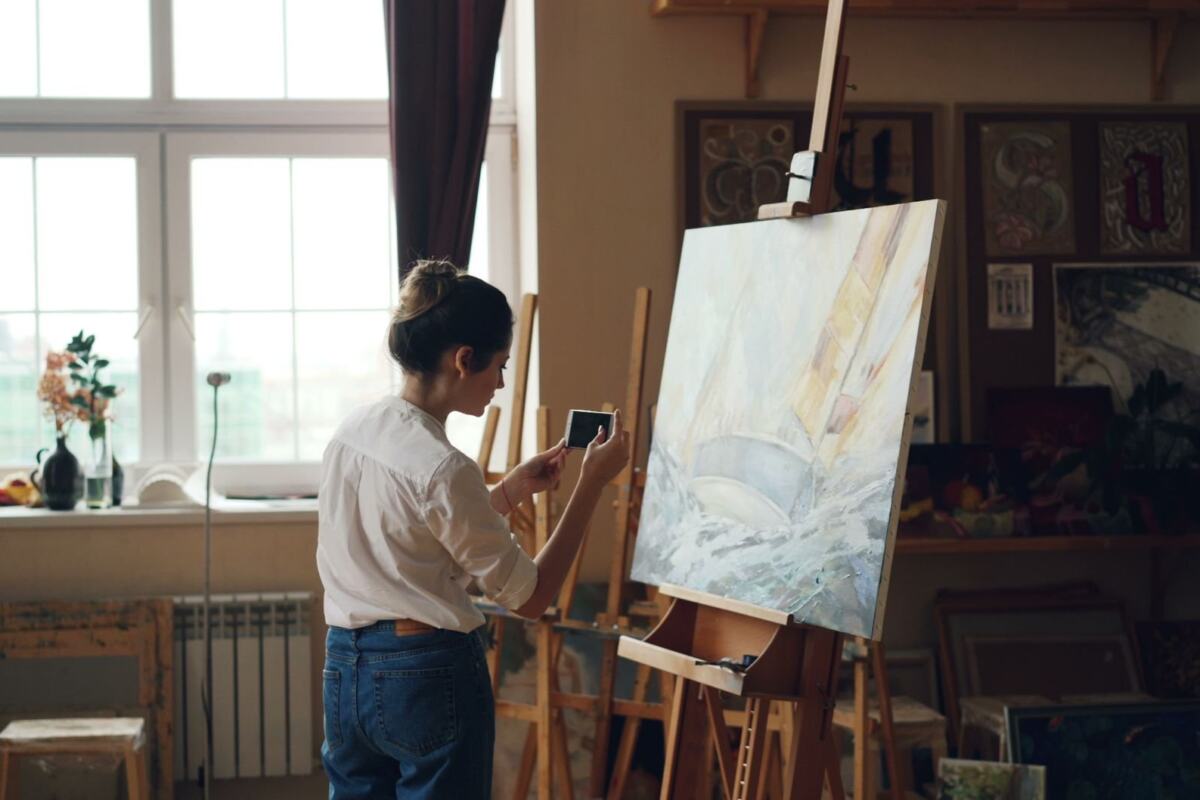
A listing needs good photos and a clear way to buy. Louise Fletcher’s advice is to have a website with good photos and a way to buy, and the two requirements work together: strong product photography without a purchase path loses the buyer, and a checkout without convincing images gives them little reason to use it.
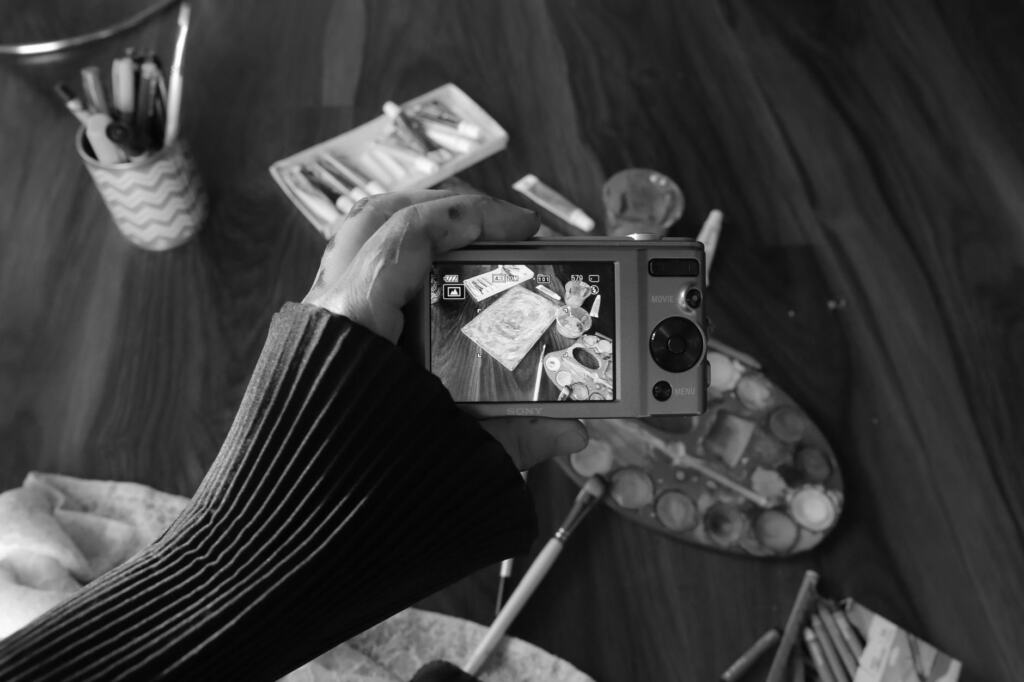
Photograph each finished piece in a consistent setting so a collection looks like a body of work rather than a scatter of one-offs. Do this before pricing, because the photographs will be the main thing buyers judge the price against.

Make the purchase path as short as your platform allows. A one-page Shopify or Squarespace site with the photos and a buy button already satisfies both requirements, which is why a small start is a sound one.
Getting a first sale
A first sale is more likely when the work is launched as a finished collection to people who already want to hear about it. Josie Lewis recommends launching a collection for sale one weekend only from her website, then repeating the cycle after 3 to 6 weeks.
- Finish a collection before announcing it. A defined set of work gives buyers a reason to act on a particular weekend.
- Build an email list. Josie Lewis recommends a list over relying on social media, because social media is not a reliable way to reach people. Instagram can show the work, but the list is the channel you control.
- Launch from your own site over one weekend. A short window keeps the effort focused and gives you a clear result to review.
- Repeat after 3 to 6 weeks. Use the result of each launch to adjust prices and the next collection.
If a launch brings few sales, adjust before the next one rather than abandoning the approach: review the photos, the price and the size of the list. The repeat cycle exists so that each launch teaches you something.
Running art sales as a small business
Each channel has a cost, and the channels that cost nothing in commission still cost time. Compare them on what each sale leaves you with and on how much audience each one gives you. Commission-free originals, a markup you set, a share taken by a gallery and a site you pay to run all belong in the same budget.
- Keep what compounds. A website and an email list belong to you and carry over from one launch to the next, so they earn priority over channels you rent.
- Test before expanding. Add a channel when the current one is producing sales, not before.
- Learn from other makers. Product businesses share much of the same groundwork, and the guides on How To Start A Profitable Candle Business In 2026: Step-By-Step Launch Plan For Makers And Side Hustles and How To Start A Sticker Business: Launch A Profitable Side Hustle In 2026 show how other makers move from setup to first customers.
Frequently asked questions
How often should I post on Instagram to sell art?
Josie Lewis suggests keeping videos under 15 seconds and posting about once a day. Treat Instagram as a way to show the work and point people to your site and list.
How big should my first series of artworks be?
Aim for a series of at least 10 to 20 works, each taking under 4 hours to complete, according to Josie Lewis. The time limit keeps a whole collection achievable before a launch.
What does an art fair booth cost in the UK?
Louise Fletcher reports that fees for UK fairs seem to range from £500 to £1,500+ per booth. Treat a fair as a budgeted cost that sales must cover, alongside your online channels.