Learning how to start a interior design business means choosing a niche, setting up a legal structure that limits your liability, pricing with a clear fee model, and building a portfolio before chasing clients. Title rules depend on where you work.
Picture a designer who has styled a few friends’ rooms and now wonders whether a licence, a large portfolio and a polished business plan must all come before the first paid project. Several of those beliefs are only partly true. This guide separates what holds from what does not, and it sits within the wider process of how to start a creative business.
Assumptions that hold new designers back
Most delays come from assumptions rather than missing skills. Four of them are worth checking before you spend money: that you need a licence, that you should accept every client, that you need a large portfolio, and that a business plan is only for banks. The table puts each belief next to what the evidence supports.
| Common assumption | What the evidence supports | Planning use |
|---|---|---|
| You must be licensed before you start | In some states the title is regulated and requires specific education, work experience and a passing NCIDQ exam score. In others, anyone can call themselves an interior designer. Formal qualifications are not required to work as an interior designer but can help you win work. | Check the rules where you will work before deciding how to describe your services. |
| Take any client who asks | Trying to work with everyone is named as the most common mistake when starting an interior design business. | Pick a target niche first; it shapes your services, fees and portfolio. |
| A large portfolio must come first | Five to ten well-photographed projects in your target niche are advised. Small jobs done free for friends or family can be included. | Aim for a few strong, well-documented case studies rather than a volume target. |
| A business plan is only paperwork | It is not a legal requirement, but it is a must if you are looking for third-party investment or a bank loan. | Write it anyway if you want to fix your services and pricing; write it formally if you need funding. |
The conditions in the table come from HoneyBook’s guide to starting an interior design business and ICI Education’s start-up guide.
Licensing and titles by region
Whether you need a licence depends on the place you work and on what you call yourself. The title “interior designer” is treated differently from region to region, so settle this question before you print a business card or build a website.
- Regulated-title states: in some states you need specific education, work experience and a passing score on the NCIDQ exam to use the title.
- Open-title states: in others, anyone can call themselves an interior designer, so the legal barrier to starting is low.
- Decorating focus: work centred on furnishings under the interior decorator title is generally unregulated across the board, according to HoneyBook.
- Where to look: the American Society of Interior Designers (ASID) and the National Council for Interior Design Qualification (NCIDQ) are named as good starting points for market requirements.
The practical judgement is to check requirements in your state before you decide how to position the business. If you are outside the United States, the same logic applies: look up the local rules on titles and professional practice before you promote yourself. Even where nothing is required, qualifications can help you win work, which makes them a marketing choice rather than a legal one.
Niche, services and mood boards
A narrow focus makes every later decision easier. Because trying to work with everyone is the most common starting mistake, choose a type of client or space, such as small apartments, family renovations or home offices, and let that choice drive what you offer.
Decide early whether you will work in person, remotely or both. E-design is a remote service delivered digitally, with mood boards, sourcing lists and room plans. It suits a new designer who wants to test a niche without site visits and procurement, though it still needs a clear list of deliverables so clients know what they are buying.
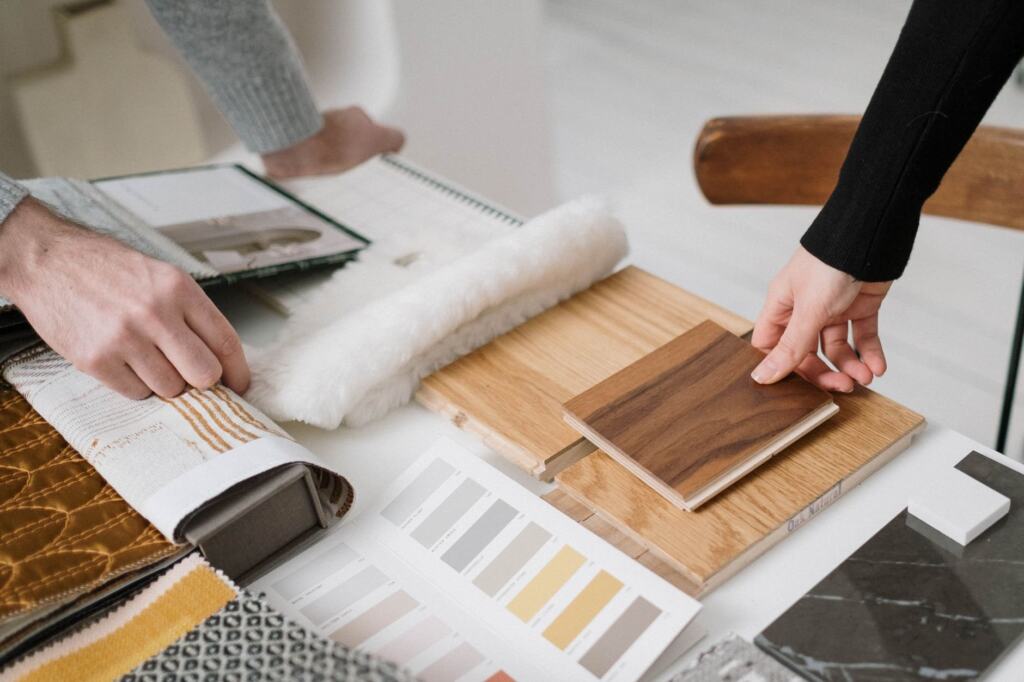
Mood boards earn a place in both your service menu and your sales process. They show a client your aesthetic before any money is spent on materials, and the same concept boards, mood boards and sourcing guides can later serve as portfolio pieces that demonstrate your process.
Business plan, legal structure and insurance
What the plan should contain
A useful plan is short and practical. The Interior Design Institute advises outlining your services, target market, pricing structure and marketing strategy, along with clear goals, the strategies for reaching them, financial projections and metrics for success. The metrics matter most in practice: without a measure of success, you cannot tell whether your niche or pricing is working.
Liability and cover
Your legal structure decides who bears the risk when something goes wrong. As a sole trader, you are personally liable for your design business, as ICI Education points out. Forming an LLC offers personal liability protection from the financial risk of sourcing and purchasing products on behalf of clients. That makes a limited structure worth serious thought if you plan to buy on clients’ behalf, and less pressing if you sell only design advice and plans.
Insurance belongs in the setup stage, not after the first job. Capella Kincheloe puts it bluntly: never set foot in a client’s home without it. Two types are worth knowing:
- General liability: protects you if something goes wrong on a job site or your work caused damage.
- Errors and omissions (E&O): covers you if a client holds you responsible for design decisions that did not go as planned.
Both are described by HoneyBook. A designer who only sells remote e-design has less site risk but still makes recommendations clients may act on, so E&O deserves a look even then.
Pricing, fees and contracts
Choosing a fee structure
Interior designers typically use one of three fee structures, or a combination, according to HoneyBook. Each suits a different kind of work:
- Hourly rate: straightforward for consulting work, but harder to scope and it can feel open-ended to clients. It suits advice sessions and projects whose boundaries are still unclear.
- Flat project fee: clearer for clients and better for designers who work efficiently, but it requires accurate scoping. Choose it once you have enough experience to judge how long a room really takes.
- Cost-plus: you charge a markup on all product and materials sourced on the client’s behalf, often alongside a design fee. It fits projects where you do much of the purchasing.
A combination is common because projects mix advice, design work and procurement. A flat fee for the design phase with cost-plus on purchased items, for example, keeps the client’s design cost predictable while paying you for sourcing time.
Setting the numbers
To price projects with confidence, start from your own finances. Understanding your cash flow, costs and profit margins helps you price your services competitively and sustainably, as the Interior Design Institute notes. That is why the financial projections in your business plan come before your rate card: a fee set only by looking at competitors can look reasonable and still leave no margin.
Contract terms for changes
Your contract is where the fee structure turns into obligations. The most important term for a new designer covers scope changes. When a project expands, you need to agree adjusted compensation for the extra hours or materials. Writing this into the contract before work begins avoids an awkward negotiation midway through a project, and it is especially important under a flat fee, where unplanned extras otherwise come out of your margin.
Portfolio and first projects
You do not need a long client history to show your work. Five to ten well-photographed projects in your target niche are advised over a larger set of weaker ones, so spend your budget on photographing a few jobs properly. Even small jobs done free for friends or family can be included, as ICI Education notes, provided the quality is high.
Show how you think as well as the finished room. Concept boards, mood boards and sourcing guides demonstrate your aesthetic and process, and they give prospective clients something to react to before a project exists.

A practical order of work
The sequence below keeps early spending low and puts the risky decisions first.
- Check title rules: confirm what your region requires before you describe your services.
- Choose your niche and services: decide whether you offer in-person design, e-design or both.
- Write the plan: cover services, target market, pricing, marketing and financial projections.
- Set up structure and insurance: decide between sole trader and LLC, and arrange cover before entering any client’s home.
- Fix your fee model and contract: include the rule for adjusted compensation when scope grows.
- Build the portfolio: photograph a small number of strong projects, including small free jobs if the quality is high.
If you are weighing this path against other creative start-ups, How To Start A Sticker Business: Launch A Profitable Side Hustle In 2026 and How To Start A Permanent Jewelry Business: Step-By-Step Guide To Launch And Grow In 2026 show how product-based and service-based launches differ in setup and pricing.
Frequently asked questions
| Question | Answer |
|---|---|
| Do I need insurance before my first client visit? | Yes. Cover should be in place before you enter a client’s home. General liability and errors and omissions cover address different risks. |
| Is a business plan a legal requirement? | No. It becomes essential when you seek third-party investment or a bank loan, and it is still a useful way to fix services, pricing and marketing. |
| Can unpaid projects go in my portfolio? | Yes. Small jobs done free for friends or family can be included if the work is good enough. Quality matters more than the number of pieces. |
| What does an e-design package include? | E-design is delivered remotely and digitally, typically with mood boards, sourcing lists and room plans. |
| Can I combine fee structures? | Yes. Hourly, flat-fee and cost-plus pricing are often mixed, for example a flat design fee plus a markup on products you source. |