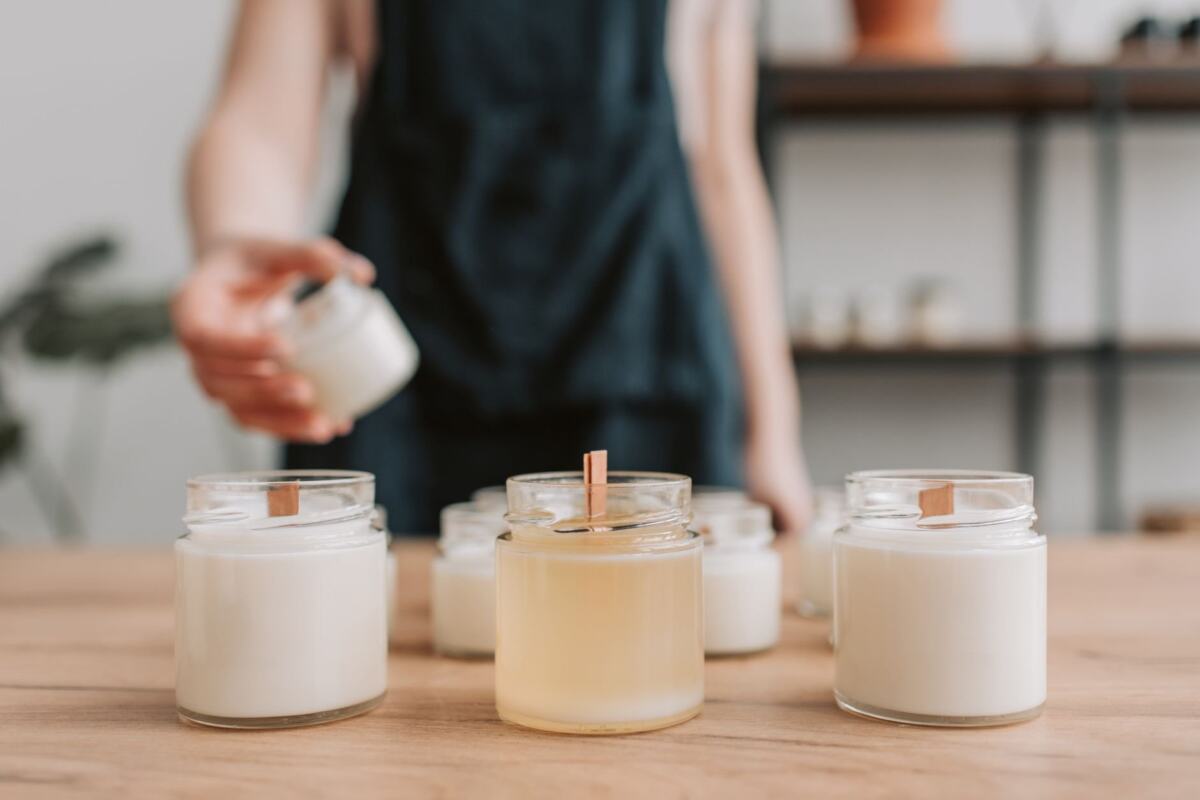
Here is how to start a candle business: choose a niche, write a simple plan, test wax and scent, price from full costs and sell online. Start-up runs $50 – $150 print-on-demand or $500 to $2,000+ DIY.
This launch plan is one practical example of how to start a creative business. It is built around three decisions that matter most to makers: how you price, how you present the brand, and how you earn the right to approach wholesale buyers.
Niche and business plan
A candle business starts with a narrow audience and a short written plan. Printify’s launch guide says the plan should cover your target market, product line, pricing and legal structure, and it advises picking one or two target markets to lead with, then niching down further.
That advice suits makers with a small budget. A tight niche lets you choose fewer scents, one container style and one clear price band. It also gives your first photos and product descriptions a single job to do. If you cannot describe your buyer in one sentence, wait before buying materials.
The candle business then has two practical routes, covered next: sell candles made by someone else through print-on-demand, or make them yourself. The choice decides how much cash you put at risk before the first sale.
Start-up costs by route
Print-on-demand is the cheapest way to test a niche, and DIY is the route for makers who want control over formula and scent. The table sets the two routes side by side, with the bulk wax price gap that shapes DIY costs.
| Option | Typical figure | Planning use |
|---|---|---|
| Print-on-demand candle business | Start-up costs of $50 – $150; catalog candles from $9.18 per candle | Test a niche and brand with little cash tied up, before you commit to equipment. |
| DIY candle business | $500 to $2,000+ depending on materials, equipment, inventory, packaging and staff | Budget at the top of the range if you want several scents, branded packaging or helpers. |
| Soy wax, bulk bag versus trial pack | $0.065/oz for a 10kg bag at $65, versus $0.17/oz for a 500g trial pack at $8.50 | Buy the trial pack while testing, and move to bulk bags once your formula is settled. |
The start-up ranges and the catalog price come from Printify, and the wax unit costs come from Craftybase.
The spread inside the DIY range is mostly a scope decision. Staff, a large inventory and heavy packaging push you toward the upper end. A single product line made by one person keeps you nearer the lower end.
Materials and test batches
Your materials decide both the quality of the candle and most of its cost. Treat them as an experiment first and a purchase second.
Wax
Wax makes up roughly 85-95% of a candle’s bulk, so your wax choice and your buying format shape both the product and the budget. Craftybase places paraffin as the lowest-cost option, soy wax in the mid-range and beeswax at higher cost. Soy suits a maker who wants a mid-priced natural-positioned product. Beeswax suits a premium line where the higher material cost can be carried in the price.
Fragrance oil
Fragrance is the part customers remember, so test it before you commit. Candle Business Pro gives 8-10% by weight as typical use and recommends buying 2 oz samples first, before investing in bulk jugs. Pick a signature scent from those samples rather than from a catalog description alone.
Containers
The container is a safety decision as well as a design one. The same guide advises always buying containers intended for candle use, or testing them for heat resistance. A pretty jar that has not been checked is a poor reason to change your product line.
Keep a simple record of each test batch so a good result can be repeated and a bad one understood. Whatever you record, keep the written formula alongside the label you will sell under, because the label comes next.
Pricing candles
Price from every cost you carry, not from what similar candles seem to sell for. Craftybase gives the formula as cost of goods + overhead allocation + labour + target margin = selling price.
A worked reference point
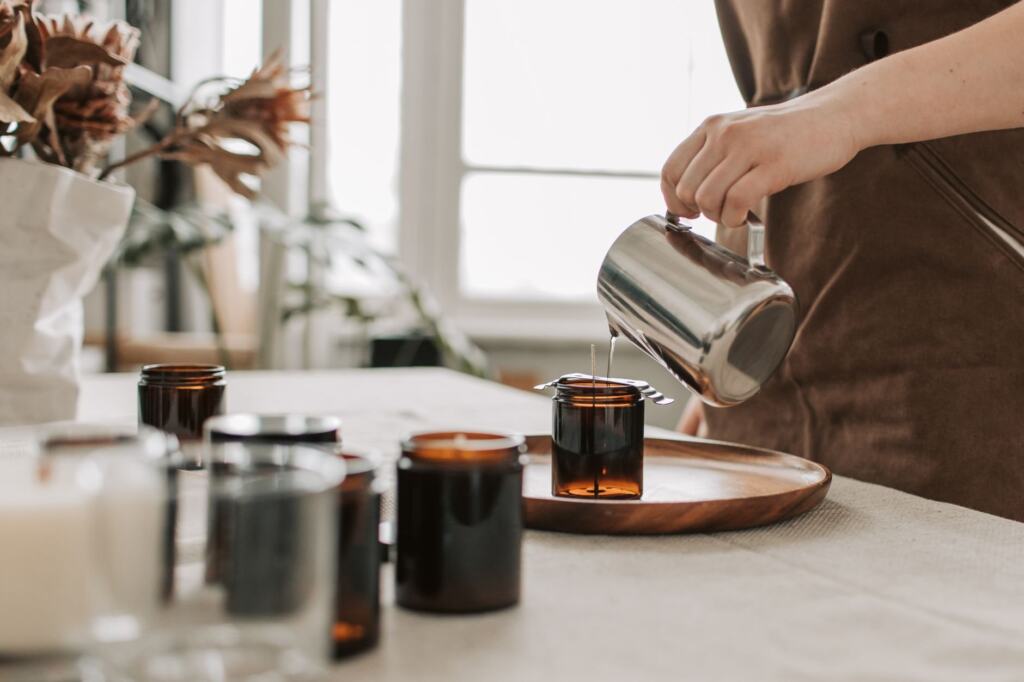
Craftybase’s own example is an 8oz soy candle with a full cost of $6.41, made up of $3.41 in materials and $3.00 in labour, based on 12 min at $15/hr. Sold at $18.00, it gives a 64% gross margin. Craftybase says gross margins of 60-70% are achievable for handmade candles. Use that as a benchmark for your own numbers, not as a promise for your product.
Shortcuts and targets
If you need a quick check before you have full costs, Craftybase offers a keystone markup on materials cost alone as a starting point for handmade candles. It describes this as a rough shortcut, not a formula, so replace it with the full calculation as soon as you can. All Seasons Wax Company suggests aiming for at least a 100% profit margin on direct-to-consumer candles, with wholesale and bulk lower. The two sources frame margin differently, so choose one basis and apply it consistently across your price list.
Channel fees and repeat buyers
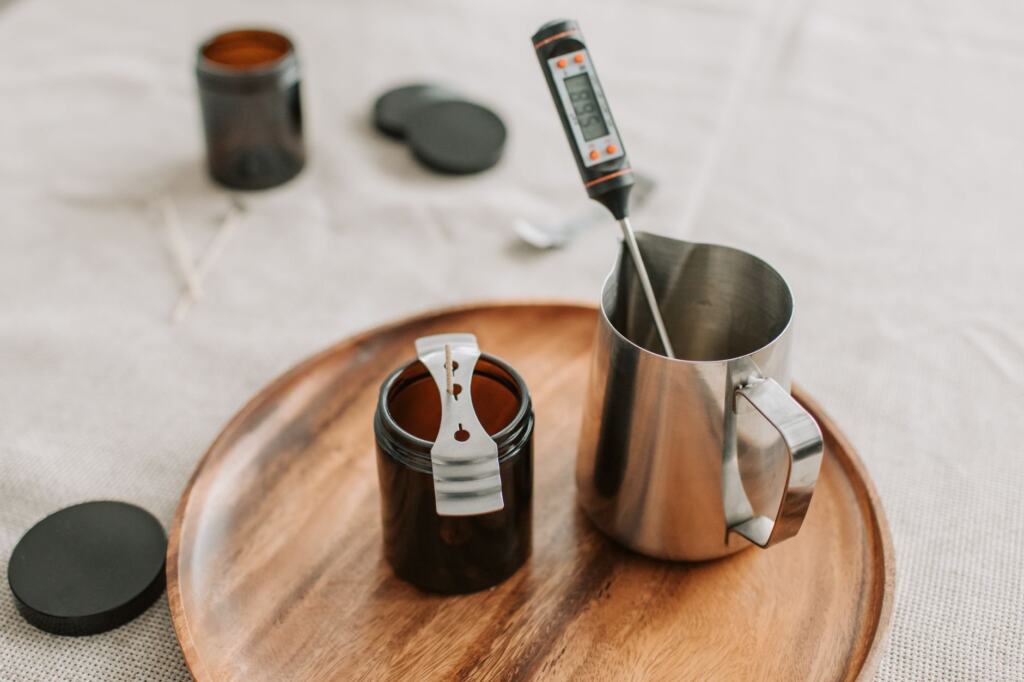
Selling on Etsy changes the arithmetic. Craftybase notes that Etsy’s 6.5% transaction fee plus listing fees need to be factored into your pricing, so build them into the price rather than absorbing them from your margin.
Repeat purchase is where a healthy margin pays off. All Seasons Wax Company gives the example of a customer buying 3 candles per year at $40 each, which makes $120 yearly customer value against a $15 cost per candle. That is why gift sets and reorder prompts matter more than chasing one-off buyers.
Labels, safety and legal setup
Your product must be safe to burn and clearly labelled before it is sold. Printify lists the standard contents of a retail candle label: scent name, business name, net weight in ounces and a safety warning. Add these to every candle, including samples that leave your workshop.
Pair the label with the container check above, since a safe jar and a clear warning work together. Confirm registration and labelling rules with your own government’s small business office before launch, because requirements depend on where you operate and sell.
Choose a legal structure when you write the plan, since it is part of the plan’s contents. The cost of one common US option appears in the FAQ below.
Brand, packaging and where to sell
Packaging is the first thing a buyer judges, so let it say what the brand is. All Seasons Wax Company contrasts brown craft packaging, which reads as earthy, with matte black, which reads as luxury. Choose the one that matches your niche and price band, then keep it consistent on labels, boxes and product photos.
A marketplace such as Etsy is a practical first sales channel, according to Printify. It gives you an online store without building one from scratch, at the cost of the fees already built into your price. If you plan to run your own store later, the principles in How to Sell Your Art Online: A Practical 2026 Guide To Earn Money And Grow An Audience apply equally to candles: clear photography, honest product descriptions and a path from first sale to repeat customer.
Launch order and the path to wholesale
Launch in a sequence that lets each step check the one before it:
- Test and record. Finish scent and container tests and write down the formula.
- Cost and price. Run the full pricing formula, including labour and channel fees.
- Label and package. Add the standard label contents and the packaging that fits your niche.
- List and sell. Open one marketplace listing for a small range, and watch which scent sells.
Wholesale comes after that sequence, not before it. Wholesale and bulk pricing sits below the direct-to-consumer margin target, so approach shops only when your full cost per candle, labour included, is confirmed and the price still leaves room. A shop buyer will also expect the same label and scent every time, which your recorded formula supports.
When online orders and shop orders start to overlap, a shared tracker keeps batches and deadlines visible. Compare options in this guide to the best project management tool for freelancers, and let one repeat-buyer scent lead your wholesale pitch.
Frequently asked questions
How much does an LLC filing cost for a candle business?
In the US, Printify says LLC filing fees typically range from $35 to $500 depending on state. Whether you need one depends on the legal structure you choose in your plan.
What is a resale certificate and why would a candle maker want one?
According to Printify, a resale certificate lets you buy wax, fragrance and containers tax-free, because the materials end up in a finished product you will sell.
Should I use essential oils or fragrance oils?
Candle Business Pro recommends fragrance oils designed for candles unless you have a specific reason to use essential oils.